Page 340 Acute Pain Management
P. 340
analgesia correlated with a reduction in pain of at least 20/100 mm on VAS and titration
of analgesia to the patient’s pain reports. Nevertheless, 60% of patients presenting to the
emergency department with abdominal pain were satisfied with their analgesia on discharge
(Marinsek et al, 2007 Level IV).
A common misconception is that analgesia masks the signs and symptoms of abdominal
pathology and should be withheld until a diagnosis is established. Pain relief does not interfere
with the diagnostic process in acute abdominal pain in adults (Ranji et al, 2006 Level I; Manterola
et al, 2007 Level I) or in children (Kim et al, 2002 Level II; Green et al, 2005 Level II).
If pain is severe, opioids may be required. Although it has previously been recommended that
pethidine be used in preference to morphine, particularly for renal and biliary colic due to the
theoretical risk of smooth muscle spasm, there is no evidence to support this position
(see Section 9.6.1).
Renal colic
See Section 9.6.1.
Biliary colic and acute pancreatitis
See Section 9.6.1.
Acute cardiac chest pain
See Section 9.6.3.
Acute pain and sickle cell disease
See Section 9.6.4.
Migraine
Most migraine headaches are successfully managed by the patient and his or her family
doctor. However a small number of patients fail to respond and present for treatment at the
emergency department. Approximately 80% of patients have tried their usual medications
(simple analgesics and triptans) before presentation (Larkin & Prescott, 1992; Shrestha et al, 1996).
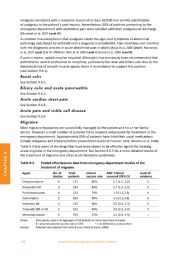
Table 9.4 lists some of the drugs that have been shown to be effective agents for treating
acute migraine in the emergency department. See Section 9.6.5 for a more detailed review of
CHAPTER 9 the treatment of migraine and other acute headache syndromes.
Pooled effectiveness data from emergency department studies of the
Table 9.4
treatment of migraine
Agent
studies
success rate
evidence
patients
success# (95% CI)
171
II
1.7 (1.5, 2.0)
6
Chlorpromazine No. of Total Clinical NNT: Clinical Level of
85%
Droperidol IM 3 233 83% 1.7 (1.5, 2.0) II
Prochlorperazine 4 113 79% 1.9 (1.5,2.3) II
Sumatriptan 5 659 69% 2.3 (2.1,2.6) II
Ketorolac IM 6 155 66% 2.5 (2.0, 3.3) II
Tramadol [IM or IV] 3 191 60% 2.9 (2.3, 3.9) II
Metoclopramide 6 374 57% 3.1 (2.6, 3.9) I
Notes: Only agents used in an aggregate of 50 patients or more have been included.
# = assumes placebo success rate of 25% * = As defined by study authors
Source: Adapted and updated from Kelly & Gunn (Kelly & Gunn, 2008).
292 Acute Pain Management: Scientific Evidence