Page 129 Guide to Pain Management in Low-Resource Settings
P. 129
Acute Trauma and Preoperative Pain 117
Mild pain
VAS=1-3/10
IM/IV Pentazocine
IM/IV NSAID’s
Cold/Hot compresses
Tolerable pain
Yes No Re-evaluate Moderate pain
VAS=4-6/10
Proceed
to planned
definitive
Rx Cold/Hot compresses
IM/IV Tramadol
IM/IV Pethidine
Tolerable pain
Yes Severe pain
No Re-evaluate VAS=7-10/10
Proceed
to planned IV/IM Morphine
definitive IV/IM Fentanyl
Rx
Proceed to planned
definitive treatment
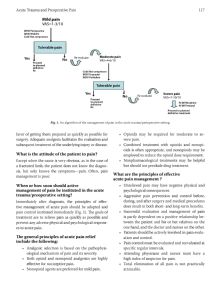
Fig. 1. An algorithm of the management of pain in the acute trauma/perioperative setting.
favor of getting them prepared as quickly as possible for • Opioids may be required for moderate to se-
surgery. Adequate analgesia facilitates the evaluation and vere pain.
subsequent treatment of the underlying injury or disease. • Combined treatment with opioids and nonopi-
oids is often appropriate, and nonopioids may be
What is the attitude of the patient to pain? employed to reduce the opioid dose requirement.
Except when the cause is very obvious, as in the case of • Nonpharmacological treatments may be helpful
a fractured limb, the patient does not know the diagno- but should not preclude drug treatment.
sis, but only knows the symptoms—pain. Often, pain
What are the principles of eff ective
management is poor.
acute pain management ?
When or how soon should active • Unrelieved pain may have negative physical and
management of pain be instituted in the acute psychological consequences.
trauma/preoperative setting? • Aggressive pain prevention and control before,
Immediately after diagnosis, the principles of eff ec- during, and after surgery and medical procedures
tive management of acute pain should be adopted and does result in both short- and long-term benefi ts.
pain control instituted immediately (Fig. 1). Th e goals of • Successful evaluation and management of pain
treatment are to relieve pain as quickly as possible and is partly dependent on a positive relationship be-
prevent any adverse physical and psychological respons- tween the patient and his or her relatives on the
es to acute pain. one hand, and the doctor and nurses on the other.
• Patients should be actively involved in pain evalu-
Th e general principles of acute pain relief ation and control.
include the following: • Pain control must be evaluated and reevaluated at
• Analgesic selection is based on the pathophysi- specifi c regular intervals.
ological mechanism of pain and its severity. • Attending physicians and nurses must have a
• Both opioid and nonopioid analgesics are highly high index of suspicion for pain.
eff ective for nociceptive pain. • Total elimination of all pain is not practically
• Nonopioid agents are preferred for mild pain. attainable.