Page 389 Acute Pain Management
P. 389
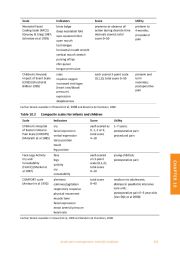
Scale Indicators Score Utility
Neonatal Facial brow bulge presence or absence of preterm to
Coding Scale (NFCS) deep nasolabial fold action during discrete time 4 months;
(Grunau & Craig 1987; eyes squeezed shut intervals scored; total procedural
Johnston et al 1993) score 0–10 pain
open mouth
taut tongue
horizontal mouth stretch
vertical mouth stretch
pursing of lips
chin quiver
tongue protrusion
Children's Revised cries each scored 3‐point scale preterm and
Impact of Event Scale requires oxygen (0,1,2); total score 0–10 term
(CRIES) (Krechel & increased vital signs neonates;
Bildner 1995) (heart rate/blood postoperative
pressure) pain
expression
sleeplessness
Further details available in Howard et al, 2008 and Bandstra & Chambers, 2008
Table 10.2 Composite scales for infants and children
Scale Indicators Score Utility
Children’s Hospital cry each scored as 1–7 years;
of Eastern Ontario facial expression 0, 1, 2 or 3; postoperative pain
Pain Scale (CHEOPS) verbal expression total score procedural pain
(McGrath et al 1985) 4–18
torso position
touch
leg position
Face Legs Activity face each scored young children;
Cry and legs on 3‐point postoperative pain
Consolability activity scale (0,1,2);
(FLACC) (Merkel et total score
al 1997) cry 0–10
consolability CHAPTER 10
COMFORT scale alertness total score newborn to adolescent;
(Ambuel et al 1992) calmness/agitation 8–40 distress in paediatric intensive
respiratory response care unit;
physical movement postoperative pain 0–3 year olds
muscle tone (Van Dijk et al 2000)
facial expression
mean arterial pressure
heart rate
Further details available in Howard et al, 2008 and Bandstra & Chambers, 2008.
Acute pain management: scientific evidence 341