Page 390 Acute Pain Management
P. 390
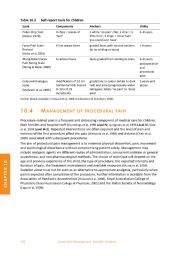
Table 10.3 Self‐report tools for children
Scale Components Anchors Utility
Poker Chip Tool 4 chips = pieces of ± white ‘no pain’ chip; 1 chip = ‘a 4–8 years
(Hester 1979) ‘hurt’ little hurt’; 4 chips = ‘most hurt
you could ever have’
Faces Pain Scale ‐ 6 line drawn faces graded faces with neutral anchors > 4 years
Revised (ie no smiling or tears)
(Hicks et al 2001)
Wong‐Baker Faces 6 cartoon faces faces graded from smiling to tears 3–8 years;
Pain Rating Scale postoperative
(Wong & Baker 1988) and
procedural
pain
Coloured Analogue modification of 10 cm gradations in colour (white to dark 5 years and
Scale horizontal VAS; scored red) and area (progressively wider above
(McGrath et al, 1996) 0–10 in 0.25 tetragon); labels ‘no pain’ to ‘most
increments pain’
Further details available in Howard et al, 2008 and Bandstra & Chambers, 2008.
10.4 MANAGEMENT OF PROCEDURAL PAIN
Procedure‐related pain is a frequent and distressing component of medical care for children,
their families and hospital staff (Cummings et al, 1996 Level IV; Ljungman et al, 1996 Level IV; Gale
et al, 2004 Level III‐2). Repeated interventions are often required and the level of pain and
memory of the first procedure affect the pain (Weisman et al, 1998) and distress (Chen et al,
2000) associated with subsequent procedures.
The aim of procedural pain management is to minimise physical discomfort, pain, movement
and psychological disturbance without compromising patient safety. Management may
include analgesic agents via different routes of administration, concurrent sedation or general
anaesthesia, and non‐pharmacological methods. The choice of technique will depend on the
age and previous experience of the child, the type of procedure, the expected intensity and
CHAPTER 10 Sedation alone must not be seen as an alternative to appropriate analgesia, particularly when
duration of pain, the treatment environment and available resources (Murat et al, 2003).
pain is expected after completion of the procedure. Further information is available from the
Association of Paediatric Anaesthetists (Howard et al, 2008), Royal Australasian College of
Physicians (Royal Australasian College of Physicians, 2005) and the Italian Society of Neonatology
(Lago et al, 2009).
342 Acute Pain Management: Scientific Evidence