Page 68 Acute Pain Management
P. 68
1.5.4 Acute rehabilitation and ‘fast-track’ surgery
In view of the numerous triggers of the injury response, including acute nociception and pain,
it is not surprising that early attempts to modify the catabolism of the injury response, with
pain relief alone, were not successful. Following abdominal surgery, epidural analgesia without
nutritional support had no effect on protein catabolism and related outcomes (Hjortso et al,
1985 Level II). Minimising the impact of perioperative fasting with IV amino acid infusions
decreased postoperative protein catabolism following colorectal surgery (Schricker et al, 2008
Level III‐2; Donatelli et al, 2006 Level III‐2).
Epidural analgesia, aimed at the operative area spinal segments and comprising low doses of
local anaesthetic and opioid, facilitated mobilisation and accelerated food intake. Such a
program permitted a more rapid postoperative return of normal cardiopulmonary response to
CHAPTER 1 (Basse et al, 2002 Level III‐2; Carli et al, 2002 Level II).
treadmill exercise and facilitated return of overall exercise capacity 6 weeks after surgery
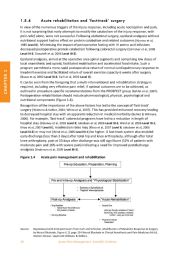
It can be seen from the foregoing that a multi‐interventional and rehabilitation strategy is
required, including very effective pain relief, if optimal outcomes are to be achieved, as
outlined in procedure‐specific recommendations from the PROSPECT group (Kehlet et al, 2007).
Postoperative rehabilitation should include pharmacological, physical, psychological and
nutritional components (Figure 1.4).
Recognition of the importance of the above factors has led to the concept of ‘fast‐track’
surgery (Wilmore & Kehlet, 2001; White et al, 2007). This has provided enhanced recovery leading
to decreased hospital stay with an apparent reduction in medical morbidity (Kehlet & Wilmore,
2008). For example, ‘fast‐track’ colorectal programs have led to a reduction in length of
hospital stay (Delaney et al, 2003 Level II; Jakobsen et al, 2006 Level III‐2; Wind et al, 2006 Level III‐1;
Khoo et al, 2007 Level II); readmission rates may (Khoo et al, 2007 Level II; Jakobsen et al, 2006
Level III‐2) or may not (Wind et al, 2006 Level III‐1) be higher. A fast‐track system also enabled
early discharge (less than 3 days) after total hip and knee arthroplasty, although after total
knee arthroplasty, pain at 10 days after discharge was still significant (52% of patients with
moderate pain and 16% with severe pain) indicating a need for improved postdischarge
analgesia (Andersen et al, 2009 Level III‐3).
Figure 1.4 Acute pain management and rehabilitation
Source: Reproduced with kind permission from Carli and Schricker, Modification of Metabolic Response to Surgery
by Neural Blockade, Figure 6.12 page 134 Neural Blockade in Clinical Anesthesia and Pain Medicine,4th Ed,
Wolters Kluwer, Lippincott Williams & Wilkins .
20 Acute Pain Management: Scientific Evidence